Sunday, April 10, 2011

My first châteaux


On this, my fourth trip to France, I finally took a trip outside of Paris: to the Loire valley, where I found out that fairy-tale castles do indeed exist. We hopped on TGV and an hour later were in a dingy suburb of Tours, where we picked up a rental minivan (my first time driving in Europe!) called, incongruously enough, Le Picasso and headed to Amboise. Just the day before, when we still had not made any concrete plans for our three-day excursion, a friend excited said, "You have to go to where we were married! You have to stay in the château!" No complaints from me — I've always felt, on some level, that I belonged in a château, and this one fit the bill: not too big, as châteaux go, quiet, unpretentious (no cheesy certification from some random corrupt hotel association, no ostentatious "luxury" items), on the most beautiful grounds, and with a staff of invisible workers who we never, ever saw. Our only contact was with Olivier, the manager, who nonchalantly chose a room for us when we arrived, not even asking for a credit card.


The Loire is magical. We visited one château on Monday — Chenonceau, which is privately owned and in excellent condition. It's built over a river — Catherine de Medici's idea — and the rooms are filled with objets and paintings and furniture and so forth, as well as piles of fresh flowers from the gardens.


You approach the château by walking down a long allée of tall trees, with just a glimmer of the castle in the distance: exactly like New York City Ballet's production of The Sleeping Beauty. I just could not get over it. Oh, and you pass an ancient keep, then cross a drawbridge. I mean, come on.


We spent hours there, checking out every room, wandering the gardens, trying unsuccessfully to get lost in the maze. The sun came out (finally!) in the late afternoon, just before we discovered the tulip garden, which was positively aglow. I took about six hundred pictures of the flowers (like I've said, it's been a loooooong winter), and bored R. silly going on about the ancient wisteria.


Then we had possibly the best meal of the whole trip: dinner at Le Bon Laboreur, an auberge right by Chenonceau. Highlights were the amuse-bouche of carrot velouté with cumin cream, the local chèvres, and the roasted pineapple with chantilly cream and sponge cake. Oh, and the local wines: Vouvray pétillant (my new favorite word from the trip, translated as "sparkling") and the Pouilly-Fumé.


Note: All the photos are of Chenonceau.

Friday, April 8, 2011

Dimanche


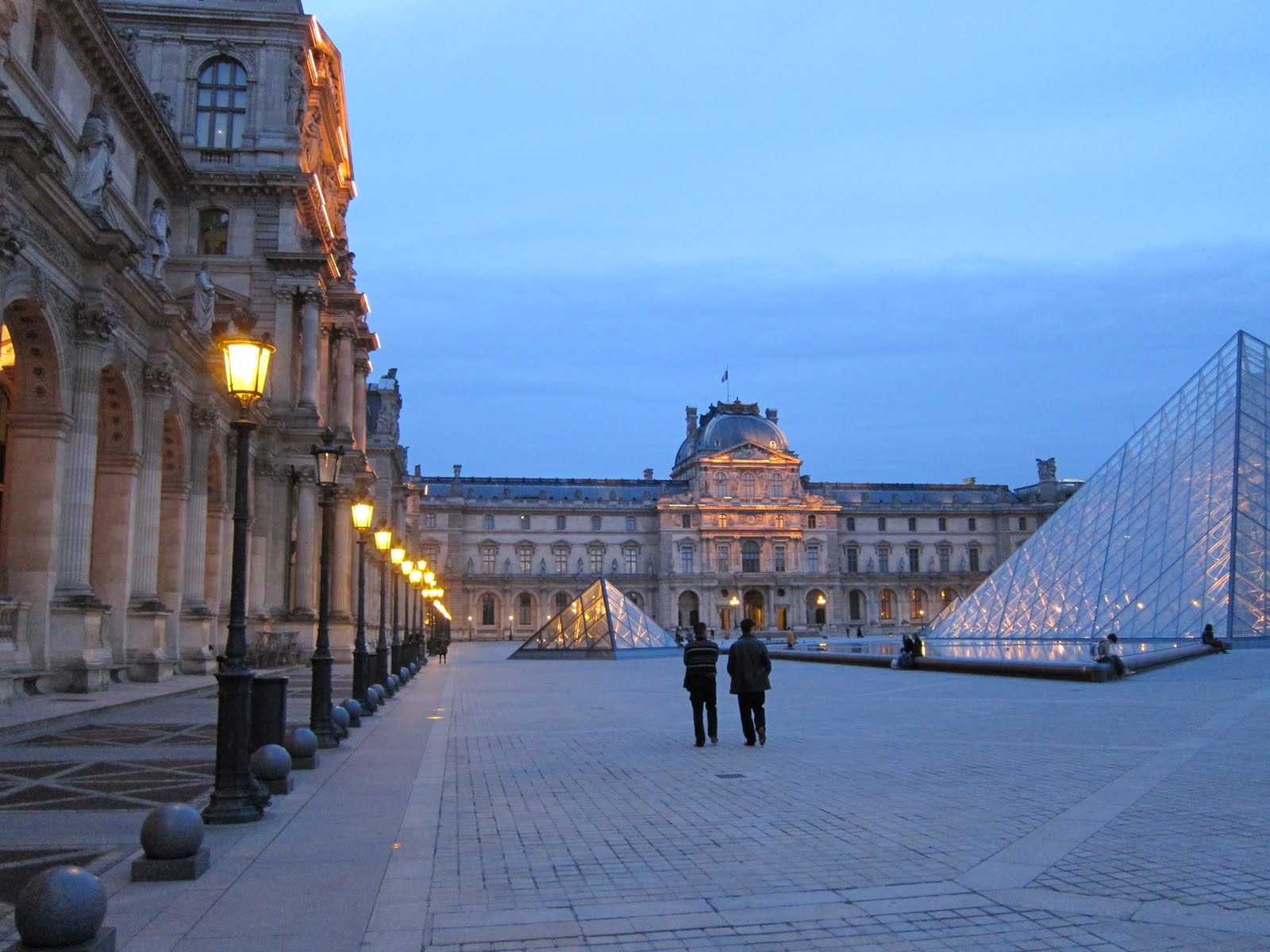
Perhaps our top Paris experience was an impromptu late afternoon / early evening Velib ride. On your next trip to Paris, you must rent a Velib and bike around, and please please please, go to the Louvre courtyards after dark, when the exterior is lit up, and the pyramid is glowing, and then ride across the Seing and watch the Eiffel Tower's spotlight shine against the sunset.


PS: I'm back in NYC, and catching up on the blogging -- I'll post a few more "from" the Loire and Paris.

Wednesday, April 6, 2011

Samedi


For almost our entire time in France (and I'm writing this on our eighth day), the weather forecast for the coming days has been gorgeous: sunny, 70s, breezy. And then the day comes, and it's grey and windy and damp. It's rather like a "Jam yesterday, and jam tomorrow, but never jam today."


However, Saturday was gorgeous — a perfect Parisian spring day, with everyone out and enjoying the parks, streets, outdoor cafés, and plazas. We finally made it to Grande Epicerie (one of my favorites), the huge food hall at Le Bon Marché. For home, I bought preserves, tea, tisane, and crunchy sugar, and for lunch in the adjacent park, we bought roquefort, comté, two mini baguettes (one white, one multi-grain), brandade de morue, marinated baby artichoke hearts, grapes, blood oranges, and mineral water. It was quite a feast.


We then hit Hugo + Victor, a highly hyped modern pastry shop, where I bought more preserves (my luggage is getting heavier and heavier), as well as an exquisite box of chocolates. And then, just to top off the afternoon, we wandered along the Seine, basking in the late afternoon glow.

Saturday night was the birthday party that was the excuse for this trip in the first place: a splashy blowout in a beautiful 19th-century building near Parc Monceau, complete with hip new band, fancy finger food, and a deadly pastry and cake selection.

Tuesday, April 5, 2011

Vendredi


OK, I've fallen behind, but what would you rather do in Paris: post blog updates, or hunt down more delicious treats?


Friday was another late start. We picked up formule déjeuner at Erik Kayser, one of my mainstays from my 25 days in Paris two years ago. This time for me: roasted chicken and roast tomatoes with mayonnaise on baguette, eau minèrale, and an insane tarte aux abricots et pistaches. We ate our picnic on the grounds of the Musee Rodin, where the flowers were just coming out. It wasn't the crazy riot of tulips I remembered from my first visit to Paris, 15 (!) years ago, but it was still a welcome sight to my winter-weary eyes.


The museum itself is charming, in a down-at-the-heels way. We noticed the water stains, the crumbling plaster, the cracked glass — and then saw a sign that basically said, We know you've noticed the water stains etc., and we're doing our best with what we have. Understood.

Dinner was with R.'s friends, at their home: more roast chicken (all the chicken here is clearly injected with concentrated chicken flavor, making it so beyond the chicken we get back home — even the expensive happy chickens at Whole Foods. I can't figure this one out — explanations are welcome.

Saturday, April 2, 2011

Jeudi: Le Marais


We’re not exactly springing out of bed and dashing outside to conquer the city. We’re more slowly emerging from a cocoon of jet-laggy sleep, letting some coffee soak into our systems, and only then, after much puttering and researching and wrapping of scarves and packing of notebooks, do we amble outside, in search of the next delicious treat.

Thursday we struck gold, at Au Fil des Saisons, a small, traditional-looking spot in the Marais where we set up camp for a couple of hours. We arrived at the tail end of lunch, but the chef, Loïc, not only welcomed us, he served us, and helped us choose the wine (a snappy and delicious Joseph Drouhin white burgundy), and answered our string of questions about the items on the chalkboard menu. (“Ça c’est egg with mushrooms and cheese; ça c’est snapper, ça c’est ….)


We had the egg (served in a gratin dish with cream and a mushroom puree and plenty of butter, all broiled together into a beautiful mess) and the escargots, which were stuffed into phyllo cigars and served with a cream sauce infused with 18 cloves of garlic (“Dix-huit?! Non!!”) For plats principaux, we had snapper en papillote with julienned vegetables and a “French risotto” with parmesan, and duck breast with a fine layer of crispy fat, served with potatoes and stir-fried vegetables with soy sauce. This is just the kind of meal that has a certain French flavor and quality (and liberality of fat) that you cannot find in the States, even in New York. I couldn’t do it every day, but for a treat, it was certainly welcome.


Then we set off to wander the Marais, one of my absolute favorite places in the world. Hausmann didn’t get his hands on this neighborhood, so it has old winding streets, back alleys, courtyards, vest-pocket parks, a hodgepodge of building shapes, sizes, and styles that you don’t see in the grand and stately arrondissements.

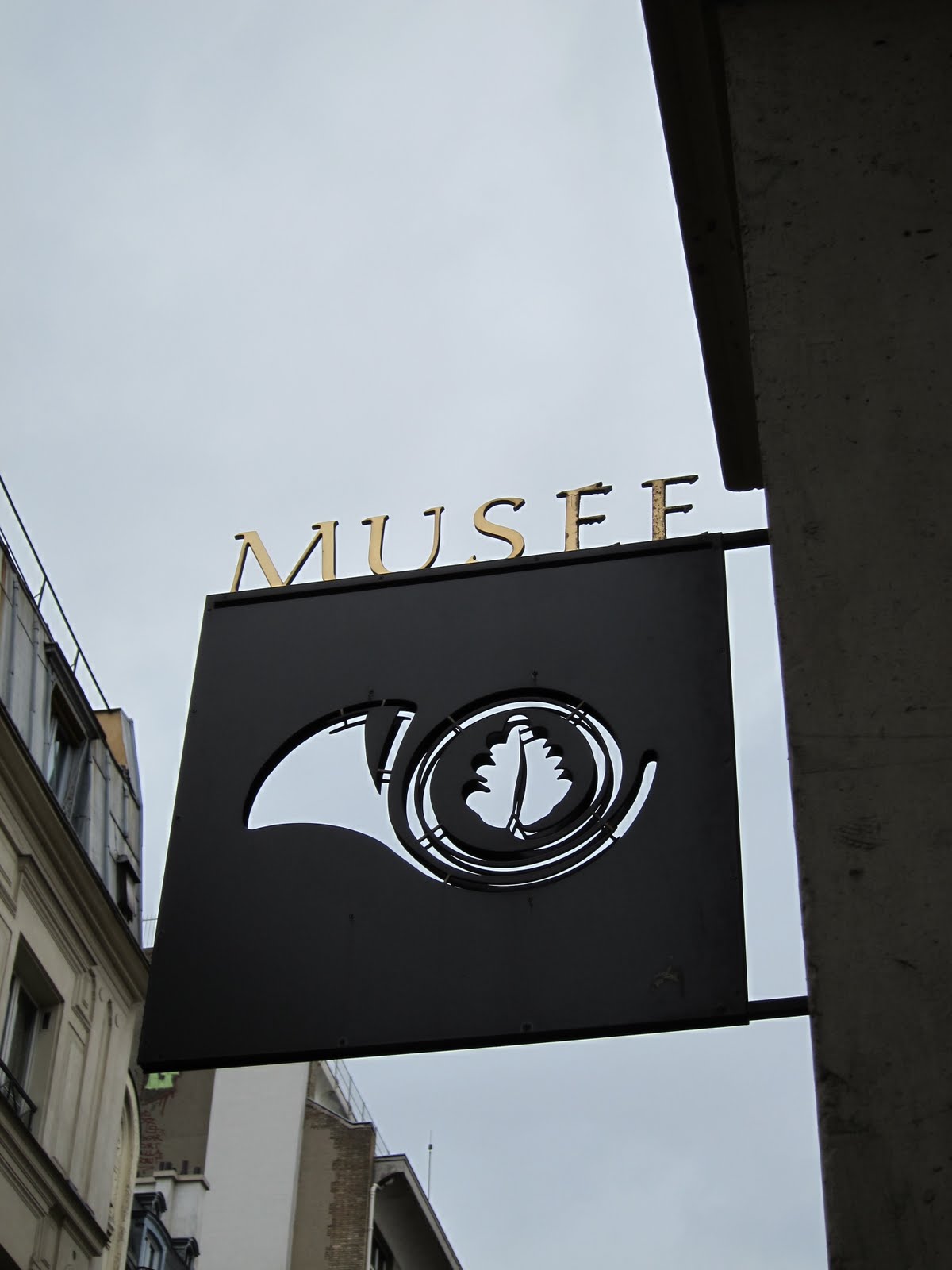
Paris, unlike New York, has museums scattered throughout the city; you’re forever stumbling across some little jewel that has its own lovely treasures. One of the more interesting ones is Le Musée de la Chasse et de la Nature (The Hunting and Nature Museum), housed (of course) in a pair of handsome hôtels particuliers in the Marais. The exhibits have clearly been designed by someone with a quirky sense of humor; the exhibit on the fox, for instance, has a taxidermy fox in a glass case, around which is built a cabinet with various drawers (one has casts of a fox’s pawprints, another casts of a fox’s leave-behinds), some sliding panels that show a mini-installation of fox drawings by a contemporary artist, and a kind of hologram that shows you the fox’s territory.


There was also a room with birdcalls, which you could call up from a vintage-y box of labeled buttons, and then rooms organized by theme (The Wild Boar and the Stag, The Big Game Hunt, The Unicorn), filled with artifacts, taxidermy, and art. Somehow, it didn’t feel creepy, but instead smart and urbane and elegant.


Already in need of fortification, we window-shopped our way over to Mariage Frères for some Assam and thé vert, and a green tea financier and a citron macaron.


We then lingered in Place des Vosges, undoubtedly one of the most serene, most dignified spots in the city. As always when I’m in Place des Vosges, it was overcast, which makes the place even more somber and reserved.


We strolled along the arcades, peeking into hotel lobbies and jewelry shops, before working our way back to the lively part of the Marais, where we had an aperitif at Les Philosophes, a classic corner café on Rue Vieille du Temple (with an amusing sign in la toilette), next to La Chaise au Plafond, where I had my daily breakfast coffee years ago, on my first trip to Paris.


Our last stop of the evening was Breizh Café, where we had maybe a bit too much of the rich, buttery galettes (Bretonese buckwheat crepes). I couldn’t resist trying the famous Bordier butter, especially when I saw there is a smoked version (beurre fumé!), so we started with that, and probably could have wrapped it up right there. But on we went: galette with egg, mushrooms, and cheese for R., and galette with Reblochon, potatoes, bacon, and salad for me.


We had to cab it home, we were so full and wiped out and footsore. In the Marain, even in one day, you can really live a very full and filling life.

Thursday, March 31, 2011

I'm baaaaack.....


This blog is the descendant of another, 25 days in paris, which chronicled a trip I took almost two years ago now. I'm back in Paris, in another apartment — alas, for only eight days — and ready to pick up where I left off: gorging on pastry, cheese, bread, chocolate, wine, and (hopefully) duck confit.


We arrived yesterday at 6 a.m., after a couple hours of fitful Ambien-induced sleep. One bleary RER ride later, and we were at our rental, a sixth-floor set-up one block from the lovely Jardins du Luxembourg.


We took a highly necessary nap, then made our way to Cuisine du Bar, the cafe next to Poilâne, which serves madly delicious tartines such as sardine with vinegar and lemon, and smoked salmon with mayonnaise, all on toasted Poilâne bread. (The smoked salmon is so different from what we're used to in New York — richer, with less smoke flavor and more fish flavor. I approve.) Salad, glass of vin blanc, and perfect café served with a butter-cookie spoon — thank you, Paris, for the lovely welcome back.

Post-lunch wandering included an unsuccessful shoe-buying attempt on my part (they didn't have my size in the navy patent wedges!), a restrained visit to Pierre Hermé (we took only one tarte vanille infiniment, which I will not even attempt to describe [but you can read about it here] and one almond-rose petal croissant, which I ate just moments before scribbling this down), a stroll along the Seine, and a quick stop for staples at Monoprix.


It was rather grey and chilly over the afternoon, and everyone kept apologizing to us for the weather. Meanwhile, I believe New York is entering its sixth month of soul-crushing winter, so to be somewhere with flowers and green grass and a light drizzle, where I don't have to wear five layers and gloves and hat and scarf and boots and STILL be cold.... my entire personality has promptly done a one-eighty.

Dinner was with friends Catherine and Loic and their three lovely (and fun) daughters, celebrating Loic's birthday at their home with delicious food and even more delicious wine, ending with a platter of pastry that, for me, was highlighted by the mille-feuille. This puff pastry / vanilla cream delight, which we call napoleon in the States, is one of my early experiences with the glory of French foods. Back in junior high in Connecticut, my friend Annick and I would head downtown to a rather remarkably good bakery called Versailles and pick up a box of two of napoleons, then sit on a park bench and devour them in a couple seconds flat. Unlike so many of my other childhood food obsessions, this one has held up quite nicely.

Friday, January 28, 2011

a string of words


Where does it all lead? What will become of us? These were our young questions, and young answers were revealed. It leads to each other. We become ourselves.

This week, I tore through Just Kids by Patti Smith, an alternately envy-producing and heartbreaking account of her life in New York in the late 1960s and ’70s, when she lived with Robert Mapplethorpe and struggled to find her path in life. Envy-producing, because of the crazy energy and the primacy of the arts scene back then. Heartbreaking, both because we know what’s ahead for the young Patti (way too much loss, as friends and icons, including her beloved Robert, overdose or die of AIDS), and because she imbues her gritty, clear-eyed book with such delicacy and sweetness.

When Robert and Patti first live together, it’s in a tiny apartment in Brooklyn, near Pratt. They have no TV, no money to go out, barely any money for books or magazines, so they spend all their time writing and making art. They’ll draw for hours, side by side, figuring out their styles, incorporating new influences, pushing each other to be better. It’s so sweet, how excited she was by the life she and Robert created for themselves. They were so broke that they’d stand on the street in a state of indecision, trying to choose between a meal at the diner or supplies from the art store; they only had enough money for one or the other.


They move into a tiny room at the Chelsea Hotel, where Patti finds a family of sorts, a family of slightly damaged, driven outcasts, an Island of Misfit Toys, or, as Patti refers to it, “a doll’s house in the Twilight Zone.” You could get by on very little money in New York in the ’70s. Not only could Patti and her compadres trade art for rent at the Chelsea or for drinks at Max’s Kansas City, but they could find raw space downtown for next to nothing, and maybe get the landlord to give them a couple months for free if they agreed to clean out the junk.

For example, since their shared room at the Chelsea doesn’t give him enough space to make art, Robert finds them a new home: an entire floor above the Oasis Bar, on the same block as the hotel. (Can you even imagine? It wasn’t that long ago that two chronically broke, near-starving artists could rent an entire floor in the heart of Chelsea. OK, maybe there was no toilet or shower, but still. A whole floor, with big windows and lots of light and plenty of space, smack in the middle of NYC. Damn.)


As she moves through the years of her young life, Patti leads with her heart and lays bare the enormous vulnerability she felt then, a vulnerability that must have been visible a mile off, given the way so many people offered help and encouragement. She gets songwriting advice from Bobby Neuwirth, Todd Rundgren takes her to hear music at the Village Gate, Sam Shepard buys her a lobster dinner when she doesn’t have anything to eat, Jimi Hendrix commiserates with her about being shy and awkward.

At one point, she’s scrounging around the Chelsea Hotel room, looking for enough change to get a cheese sandwich. She digs up 55 cents and heads down the block to the Automat, only to find the price has gone up. “Can I help?” says someone behind her:
I turned around and it was Allen Ginsburg... Allen added the extra dime and also stood me to a cup of coffee. I wordlessly followed him to his table, and then plowed in the sandwich.

Allen introduced himself. He was talking about Walt Whitman and I mentioned I was raised near Camden, where Whitman was buried, when he leaned forward and looked at me intently. “Are you a girl?” he asked.

“Yeah,” I said. “Is that a problem?”

He just laughed. “I’m sorry, I took you for a very pretty boy.”

I got the picture immediately.

“Well, does this mean I return the sandwich?

“No, enjoy it. It was my mistake.”

All right, so Ginsburg’s relationship with Patti didn’t start from a sense of protectiveness or altruism, but he ended up becoming a mentor, one of the many who helped her find her way. And now I’m listening to the result of all that encouragement, and all her hard work: her first album, “Horses,” where her fierce confidence comes roaring out at you, showing you everything she’d been through, and how she survived it all.


I don’t want to romanticize the whole starving-artists-in-the-garret scene, but it’s hard not to be wistful for Patti’s world, where nothing was more important than art and music and writing. I have to admit to feeling a bit melancholic about the choices I’ve made, ones that have given me a degree of comfort, but have taken me farther and farther from a life of creativity.

OK, maybe more than melancholic — maybe more like in a tailspin about what now look to me less like smart, practical life decisions and more like lame compromises. I’m trying not to beat myself up too badly — what’s done is done, indulging in regret means I’m living in the past, not in the present moment, and I’m causing myself pain. But I’ve learned that I can’t just put aside my regrets; I need to resolve them. So I’m trying to stay aware of the vibrations that Patti’s book set off in me, to remember the sense of loss I felt as I read her story, and to resolve to make some changes in my life.

One way that I can easily derail any resolutions to write more or to make art is to say, “But what’s the point? Where will it get me? Will I ever really be good enough?” Patti had her moments of self-doubt too, of course (and probably still does), but she finds a way forward that I’m taking to heart:
In my low periods, I wondered what was the point of creating art. For whom? Are we animating God? Are we talking to ourselves? And what was the ultimate goal? To have one’s work caged in art’s great zoos—the Modern, the Met, the Louvre?... Robert had little patience with these introspective bouts of mine. He never seemed to question his artistic drives, and by his example, I understood that what matters is the work: the string of words propelled by God becoming a poem, the weave of color and graphite scrawled upon the sheet that magnifies His motion. To achieve within the work a perfect balance of faith and execution. From this state of mind comes a light, life-charged.